 May 20, 2026 6:00 am
Published by Beyond Fossil Fuels
May 20, 2026 6:00 am
Published by Beyond Fossil Fuels
The recently announced TotalEnergies and EPH’s joint venture – named TTEP – will effectively lead to the emergence of a […]
 February 23, 2026 10:00 am
Published by Beyond Fossil Fuels
February 23, 2026 10:00 am
Published by Beyond Fossil Fuels
Clean flexibility can significantly reduce dependence on gas in the power system, helping deliver electricity that is affordable, reliable, and […]
 February 17, 2026 7:00 am
Published by Beyond Fossil Fuels
February 17, 2026 7:00 am
Published by Beyond Fossil Fuels
Beyond Fossil Fuels, together with external allies, including Climate Action Against Disinformation (CAAD), Friends of the Earth U.S., Green Screen […]
 November 18, 2025 1:23 pm
Published by Beyond Fossil Fuels
November 18, 2025 1:23 pm
Published by Beyond Fossil Fuels
Distribution grids need to transition from a network where households and businesses passively consume electricity generated principally from centralised thermal power plants – to a system where electricity is generated and consumed in a much more decentralised, flexible manner. This transformation redefines the role of DSOs. Their new role as the key enablers, innovators and investors for the energy transition necessarily implies that current governance and operational structures need overhauling. Our new report sets out high-level changes needed to transform DSOs into the enablers of the clean energy transition.
 September 25, 2025 10:01 am
Published by Julia Pazos
September 25, 2025 10:01 am
Published by Julia Pazos
The briefing “Dead end ahead: How gas plans are distracting the Western Balkans from the energy transition”, by CEE Bankwatch […]
 February 12, 2025 12:01 am
Published by Beyond Fossil Fuels
February 12, 2025 12:01 am
Published by Beyond Fossil Fuels
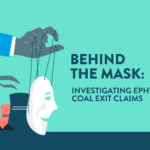
This report looks at the relationship between the sister companies EPH and EP Energy Transition (EPETr), both of which are owned by Czech billionaire Daniel Křetínský. EPH was established in 2009 and has since become a key player in the European energy market, with holdings across Europe. This report is based on an investigation carried out by researchers at FIND and commissioned by Beyond Fossil Fuels and our Re-set, due to concerns over the companies’ restructuring used to mask continued investment in coal while presenting a “cleaner” energy profile to investors and policy makers. The research finds that:
 April 24, 2025 11:52 am
Published by Beyond Fossil Fuels
April 24, 2025 11:52 am
Published by Beyond Fossil Fuels
A new global poll of nearly 1,500 business executives reveals a clear tipping point: companies around the world back a shift away from fossil fuels to a renewables-based electricity system by 2035 or sooner.
 May 13, 2025 12:01 am
Published by Beyond Fossil Fuels
May 13, 2025 12:01 am
Published by Beyond Fossil Fuels
This report examines how 32 electricity Transmission System Operators (TSOs) across 28 European countries are preparing, or failing to prepare, for a renewables-based electricity system.
 March 19, 2025 12:01 am
Published by Beyond Fossil Fuels
March 19, 2025 12:01 am
Published by Beyond Fossil Fuels
The European steel industry stands at a pivotal crossroads. As one of the most emissions-intensive sectors, responsible for 5% of the European Union's (EU) total emissions and over a quarter of industrial emissions, its transformation is essential to achieving the EU's ambitious climate goals. The steel sector must undergo rapid decarbonisation, shifting away from polluting coal-based production towards clean, near-zero emissions alternatives. This transition is not only an environmental imperative but also an opportunity to secure the industry's long-term competitiveness, ensure job security, and reinforce Europe's industrial leadership in a changing global market.